Grade 10 Science Final Summative

Artifact
Portfolio

3 artifacts from my life. 6 scientific connections. Science is everywhere.

STEM Skills Physics

Raspberry Pi LEGO Arcade

Building a retro emulation station from scratch
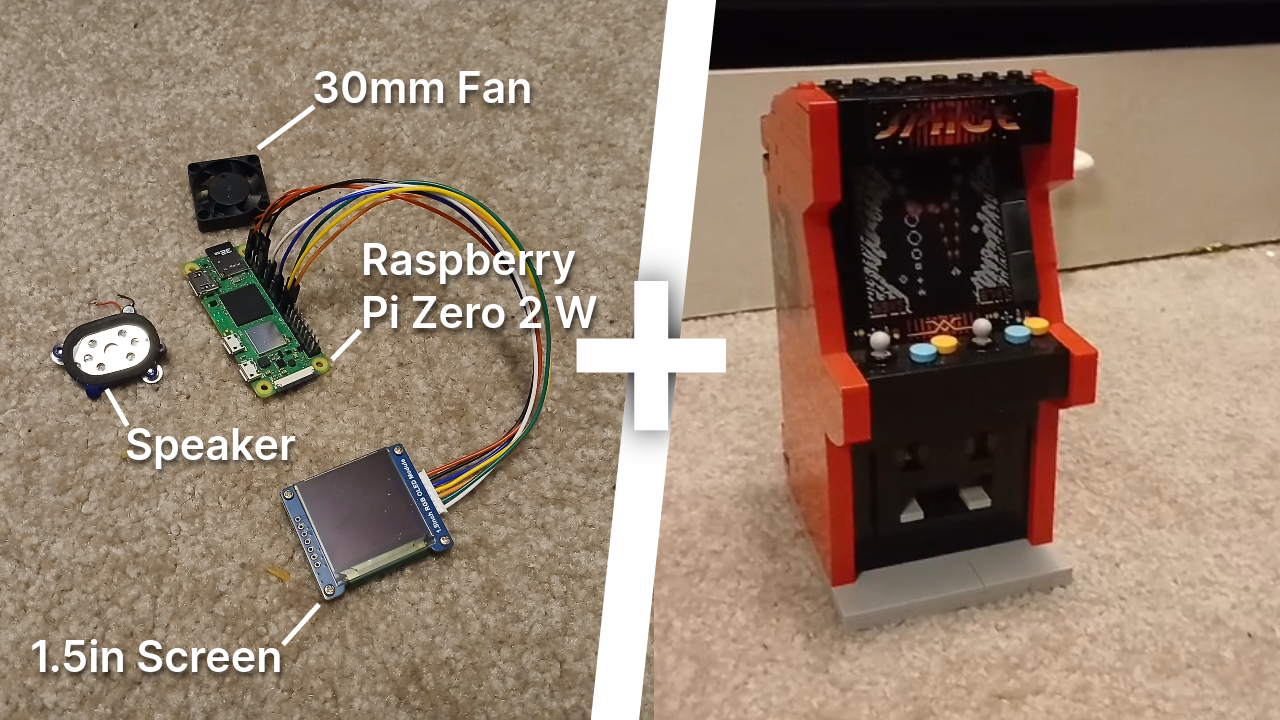
Left: Raspberry Pi Zero 2 W, 30mm fan, Speaker, 1.5-inch screen. Left: LEGO arcade cabinet
๐Ÿ–ฅ

1.5" OLED

๐Ÿ”Œ

5V 3A PSU

๐Ÿ“

Pi Zero 2 W

How OLED Produces Light

Electricity
from Pi via SPI
โ†’
Organic Layer
carbon compounds
โ†’
Light
electroluminescence

Each pixel emits light directly, so no backlight is needed. Pixels "off" = true black.

STEM Skills LG1: Scientific Investigative Skills

?

Question

๐Ÿ“š

Research

๐Ÿ’ก

Hypothesis

๐Ÿ”ง

Test & Revise

My central question: "How can I integrate a Pi Zero 2 W and screen into a LEGO arcade cabinet?"

I consulted someone with more experience and researched online for component recommendations. I had to make decisions about screen size, power supply, and OS - choosing Raspberry Pi OS Lite for hardware compatibility (though I'd prefer NixOS).

Hypothesis tested: I assumed a screen would work out of the box. The reality is I need to write my own software to pipe RetroArch to the display. I also assumed LEGO-compatible mounts existed, but they don't - so I'm hot gluing standoffs to LEGO studs.

Safety: Using correct 5V voltage, connecting components while powered off to avoid shorts.

Physics LG1: Properties and Production of Light

LCD

Backlight shines through filters

Blacks look grayish

OLED โœ“

Each pixel emits light directly

True blacks, high contrast

My 1.5" Waveshare OLED produces light through electroluminescence: organic compounds emit light when electricity passes through them.

I chose OLED for the contrast: pixels that are "off" produce no light at all, creating true blacks. CRTs, which original arcade machines used, are famous for deep blacks. OLEDs get closer to that retro look than LCDs can.

The Pi communicates via SPI connection, sending electrical signals that tell each pixel how much power to receive, determining color and brightness.

Earth/Space Chemistry

"Why the US Army electrifies this water"

Tom Scott on the Chicago electric barrier stopping invasive carp

95%

of fish biomass in affected rivers is now carp

$7B

Great Lakes fishing industry at risk

2.3 V/in

voltage gradient at the barrier surface

34ร—/sec

DC current pulse rate

Why Water Conducts Electricity

H2O

Pure water alone

Poor conductor, won't work for the barrier

โœ—
Na+Clโˆ’

Add dissolved ions

Salts and minerals split into charged particles

+
โšก

Canal water conducts

Ions carry electrical current, barrier works!

โœ“

Earth/Space LG2: Ecosystem Disruption

Imported to control algae in wastewater

Escaped during floods

Dominated: no predators, out-compete natives

Asian carp are an invasive species - a quick fix that became an ecological disaster. They have no natural predators in North America and out-compete native fish for food.

In affected rivers, carp make up 95% of total fish biomass. The original ecosystem has essentially collapsed. When one species dominates, the entire food chain is disrupted.

This illustrates how human activity destabilizes ecosystems, similar to how climate change enables invasive species to spread into warming waters.

Chemistry LG3: Chemical Processes & Environmental Safety

Key Concept

Pure H2O is a poor conductor. Canal water conducts because of dissolved ions - salts and minerals that separate into charged particles.

The ions (like sodium Na+ and chloride Clโˆ’) carry electrical current through the water, allowing the Army Corps to create a voltage gradient that stuns fish.

Environmental tradeoffs: The electricity affects all aquatic life. During 2009 maintenance, they added toxin to 10km of canal to kill everything, just in case.

Safety risks: Over 50% chance of cardiac arrest if a human enters the water. Barges create voltage sags that let small fish slip through.

This shows how solving one environmental problem can create new risks: a chemistry solution with real consequences.

Biology STEM Skills

Night Light / Blue Light Filter

How a simple setting affects my sleep timing

Before and after photos of a laptop screen with blue light filter enabled.

How Blue Light Affects Sleep

๐Ÿ‘
โ†’
Eyes detect blue light via specialized cells
๐Ÿง 
โ†’
Brain interprets blue = daylight (sky is blue)
๐Ÿšซ
โ†’
Melatonin suppressed: you don't feel sleepy
๐ŸŒ™
โ†’
Filter blue light โ†’ melatonin released โ†’ sleepy at right time
๐Ÿ”ฌ

Harvard Research Finding

Blue light suppresses melatonin for twice as long as green light and shifts circadian rhythms by twice as much (3 hours vs 1.5 hours).

Source: Harvard Health Publishing

Biology LG2: Body System Interactions

System 1

Nervous

โ†”

System 2

Hormone

Blue light affects sleep because of communication between the nervous system and hormone system.

When light enters your eyes, specialized cells send signals through the optic nerve to the brain, specifically the region controlling your circadian rhythm (internal sleep-wake clock).

Your brain interprets blue light as daylight, so it suppresses melatonin - the hormone that makes you sleepy. At night, reduced blue light allows melatonin to be released.

Since using the night light filter, I've noticed I want to sleep at more appropriate times. My nervous system and hormone production are communicating without interference from artificial blue light.

STEM Skills LG2: Applying Research to Real-World Problems

๐Ÿค”

Heard blue light affects sleep

๐Ÿ“–

Researched via Harvard Health

โœ…

Applied: enabled night light

I'd heard years ago that blue light affects sleep, so I researched it further. Harvard Health Publishing confirmed that blue light suppresses melatonin for twice as long as other colors.

The article specifically recommends "installing an app that filters the blue/green wavelength at night", exactly what the night light feature does.

The real-world issue: Screen time before bed is widespread. As devices have become common, more people are exposed to blue light late at night, disrupting sleep schedules.

I applied this research by enabling the feature. Since using it, I feel ready to sleep at appropriate times: a simple example of using scientific research to solve a personal problem that affects millions.

Citations

Scott, T. (2021). Why the US Army electrifies this water [Video]. YouTube.

https://www.youtube.com/watch?v=t3oLeSPINOk

Harvard Health Publishing. (2024). Blue light has a dark side. Harvard Medical School.

https://www.health.harvard.edu/staying-healthy/blue-light-has-a-dark-side

Grade 10 Science Artifact Portfolio ยท Casey Clayton ยท January 2026